Shipmates,
This is the Journal of EMC(SS) Wes Headington documenting his 13 Submarine War Patrols during WWII.
The Preface shares the story on how Bob Skinner, Capt. USN ret. received the journal from the family. The original copy from the family has been given to the USS Nautilus Museum in Groton, CT.
Hawkbill Member, Marty Sattison, Capt. USN ret. has transcribed the journal for easier reading and added notes on the theaters of operation and submarine information. Please enjoy and Bob, Marty, and I hope it gets the widest possible distribution. This is true account of our history and example of the quality of shipmates we all treasure as members of the Brothers of the Phin.
Ross M. Carroll
Commander Hawkbill Base/District Commander WD-8
The WWII Submarine Patrol Journal of Chief Electrician’s Mate
Wesley L. Headington
A Transcription and Annotation, Rev 2
Edited by
Martin B. Sattison, Captain, USN (Ret)
September 2026
©2026
Wesley L. Headington, 89, of Hagerman, Idaho, a World War II and Korean War veteran, peacefully passed away at his home Sunday, Jan. 16, 2011. Wes was born in Saskatchewan, Canada, to Floyd and Julia Headington on Jan. 24, 1921. He grew up and graduated from high school in Decorah, Iowa.
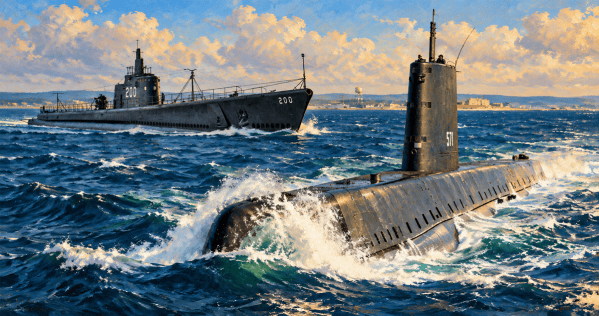
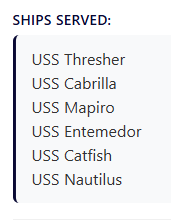
Wes enlisted in the U.S. Navy in 1939. Upon completion of Electrician Mate School and Naval Submarine School, he was proudly assigned to the USS Thresher, SS 200. Wes was entering Pearl Harbor on the Thresher as the Dec. 7, 1941, attack began. Wes qualified in submarines on the USS Thresher (SS-200) in 1942 and was a EMC(SS) when he left the Navy after 20 years of service. Wes completed 13 submarine war patrols during World War II.
Wes met and married June Hillary Price on Jan. 28, 1944, in Perth, Australia. After assignments on several submarines and participation in the Korean War, he was selected to serve on the first U.S. nuclear submarine, the Nautilus, SSN 571, commissioned in 1954.
Wes’ last naval assignment was at the Navy’s Idaho Nuclear Power Training Unit in Idaho Falls. He retired as chief electrician’s mate in Idaho Falls after 20 years of service. He spent the next 20 years working on various nuclear-related projects for Idaho National Laboratory before full retirement in 1984. Wes and June loved Idaho and spent many wonderful weekends at their Palisades Lake cabin with family and friends. Wes enjoyed hunting, fishing, gardening, woodworking, and playing cards and pool. He and June were active members of the First Lutheran Church for many years. Wes was a member of the Idaho Falls Elks Lodge.
After the death of his beloved wife in June 2003, Wes moved to Hagerman to be closer to his daughter. Wes is survived by his brothers, Douglas (Jeannine) Headington of Sun City, Ariz., and Curtis (Joan) Headington of LaCross, Wis.; sister, Jeanette Rod of Moscow, Idaho; sister-in-law, Laverne Headington of Decorah, Iowa; daughter, Kerry (Frank) Adams of Hagerman; son, Dennis (Amy) Headington of Rocky Mount, Va.; grandchildren, Jamie (Danielle) Adams of Las Vegas, Nev., Scott Headington of Austell, Ga., Todd (Macey) Headington of Fredericksburg, Va., Frankie Adams of Idaho Falls and Cody Adams of Hagerman; and great-grandchildren, Zachary Adams, Daniel Alvarez, Jaden Powell-Adams, Madison Headington, Abigail Headington and Kobe Alvarez. Wes was preceded in death by his parents; wife; brothers, Harry, Lloyd, Hugh and Roger; and great-granddaughter, Jessica Adams.